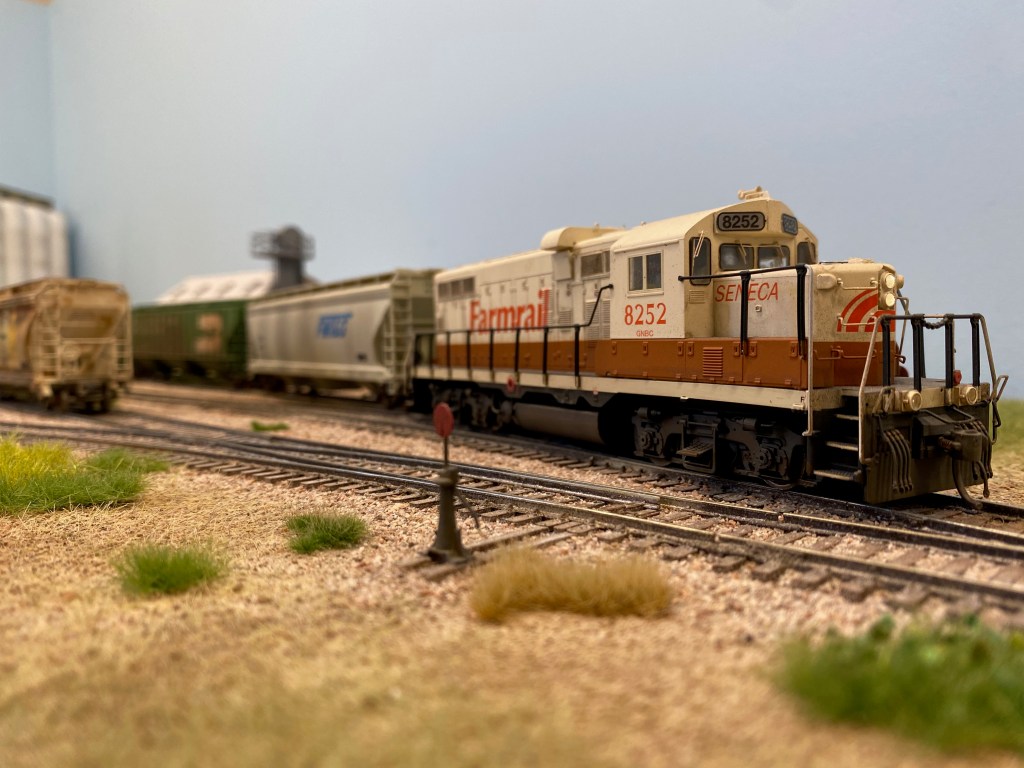
Did we lose something along the way?

My generation seems to thrive on nostalgia. We love 80’s themed stuff like Stranger Things. We’re buying analog products like record players and Polaroid cameras. The minimalist gray aesthetic in home design is out, and a “Ralph Lauren Christmas” and busy, cozy home design is in.

It makes me wonder where model railroad design may be going in coming years, and what inspirations from the past we may return to.
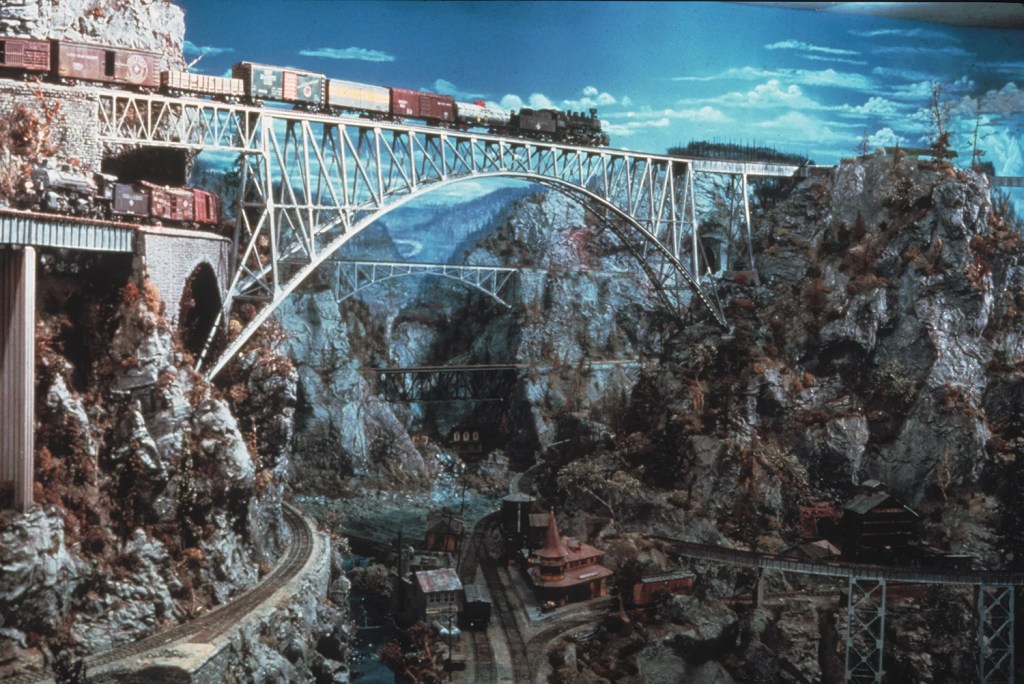
John Allen’s Gorre & Daphited. Photo credit: https://www.sundayriverproductions.com/model/gorre-and-daphetid

I’ve lately been contemplating layouts that showcase the spectacle and “wonder” of model railroading. I’ve been interested in this sort of modeling ever since I saw Malcolm Furlow’s large scale “Mexican Hat Canyon” in Model Railroader back in 2003. Granted, my interest in this approach has always been a sort of admiring from afar, especially since 2014 when I re-entered the hobby and found myself firmly in the school of Lance Mindheim and small, achievable switching layouts. However, the fascination has never quite gone away. It was renewed when I visited the incredible Minature Wunderland attraction in Hamburg, Germany in 2020, weeks before the pandemic struck:

I think this interest may have remained dormant or simply an “admiring from afar” aspect of the hobby for me. But simultaneously, as my time for chasing obscure locals, spurs, and short lines faded, my appreciation for big trains barreling by on a mainline grew. Simply put, I became more enamored with the gravitas of railroading, and thus, became more fascinated with these hobby greats who portrayed the “big-ness”, spectacle, and magic of railroading.

The greats are easy to count off… John Allen of course. And John Armstrong and Frank Ellison. But one of the earliest pioneers, Minton Cronkhite, has really stood out to me. Cronkhite showcased the “big-ness” of railroading with sweeping curves and wide open scenery.
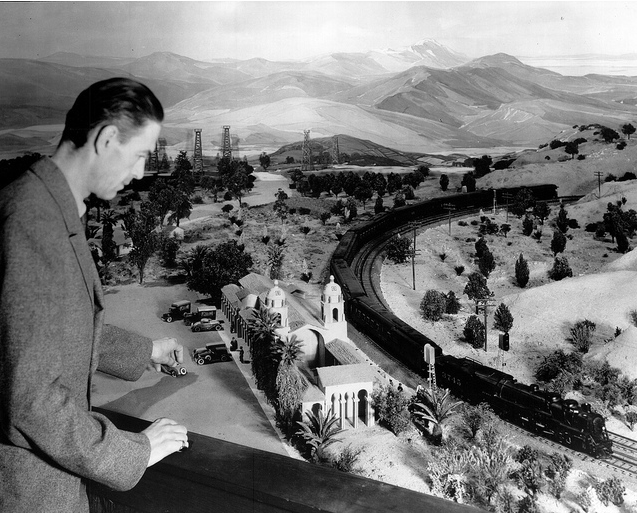
Minton Cronkhite and layout from 1935. Photo credit: https://midnightrailroader.blogspot.com/p/blog-page_27.html

Come to think of it, Minton Cronkhite’s work doesn’t seem THAT different than early iterations of David Barrow’s famed Cat Mountain & Santa Fe…

Now, people will quickly decry the size factor. These layouts were big, and size contributes to the presence they have. But I think there are modest sized examples of this sort of modeling, particularly in the present day.

Dave Meek’s Thunder Mesa layout and associated projects showcase what’s possible with magical, whimsical scenery in a modest space. Vic Smith’s “City’s Edge” is a single large scene in a relatively modest, achievable space. And I’m a big fan of FreestyleMoba on YouTube… the Germans seem to know how to combine modern modeling techniques with layout design oriented towards a spectacle.

Still, I think this sort of modeling is on the wane. And perhaps with good reason. Scenery with this particular kind of gravitas is a commitment of years and likely not easily portable. As our trains have improved, so have operations and the way we interact with layouts has fundamentally changed over decades. Slow running, highly detailed models with ever-improving sound decoders help us experience the size and presence of trains in different ways than silent trains with DC controls winding through plaster mountains.

Still, I wonder if, like Polaroid cameras and record players, a more traditional look at layout design isn’t due for a renaissance. Not without a modern flavor of course. For me, I look hard at Minton Cronkhite’s pioneering work, combined with the more modern influence of David Barrow, and wonder if something similar is achievable in a modest space in N scale… or maybe an updated take on Malcolm Furlow’s San Juan Central project layout? An of course, Iain Rice’s designs, while small and switching focused, tend to incorporate a bit of the “wonder” factor.

Food for thought indeed…
Superliners, Surfliners, and Morning Runs

If you’re like me (a train enthusiast who builds models, not a modeler who likes trains), I think you’ll agree that HOW we view and interact with trains is a big influence on our choices in the hobby. While some folks have more constant interests, I’ve found that mine change as the ways I experience trains has changed.

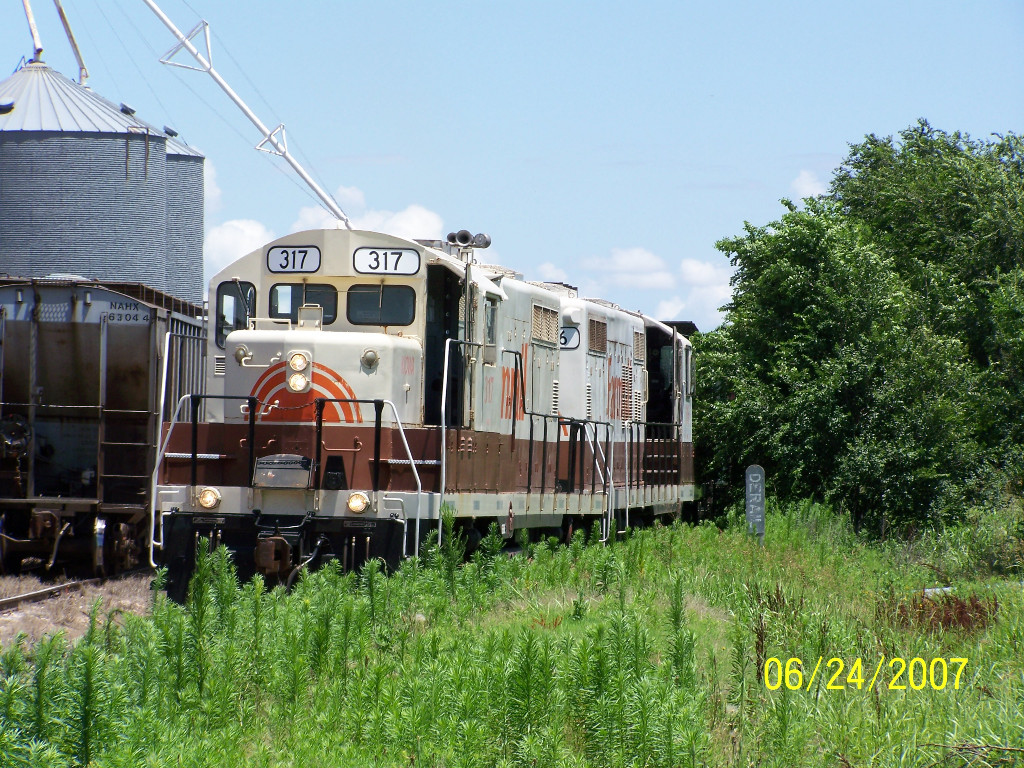
Farmrail is always going to be something special to me because of the connection to home, and I can’t see myself ever NOT modeling it. That said, there’s been a constant interest in railroading that I’ve had for years and never shaken: Amtrak.

When Genesis and I were newly married, she was in law school in Oklahoma City while I was at Fort Hood, TX. I’d take the Heartland Flyer north on long weekends to see her. It was the Heartland Flyer that brought me home on leave after my first deployment.

My lovely bride (and now my daughters) have humored me and let me plan family vacations around train trips. So the miles racked up. Southwest Chief… Capitol Limited… Silver Star… Silver Meteor… Empire Builder… Palmetto… Keystone Service… California Zephyr. Quickly, some of my favorite memories were those of seeing the country, with the ones I loved most, from the window of a train.

Sasha’s first train ride… a Viewliner sleeper!

When I took Sasha to visit Oklahoma for the first time, riding with the Farmrail crew was the highlight. But retracing the rails I rode as a newlywed 7 years earlier, now with my oldest child, was important too.

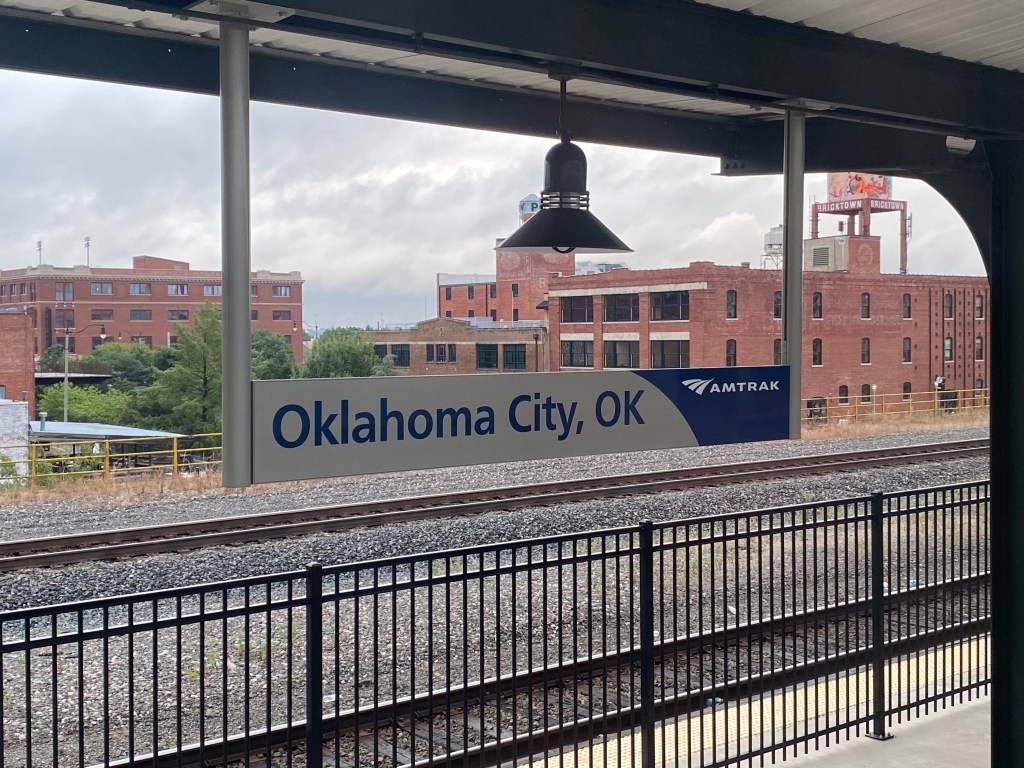
Our first trip just the two of us. Next stop, OKC.

But on another note, how I railfanned had changed. Before, I loved chasing down obscure short lines and industrial spurs. Combing the internet for information on operations and obsessively studying satellite images. But as life got busy, time for that faded away. But while living in Aberdeen, NC, I always knew how to get my train fix. See, our house there is two blocks from the tracks, and I learned time my morning run so that I’d meet the northbound Silver Star trackside. Just a few seconds of admiring the train thunder by before returning to my jog… but man, its always cool.

The early bird gets the worm. I was rewarded with a heritage unit on my morning run on this muggy June morning.

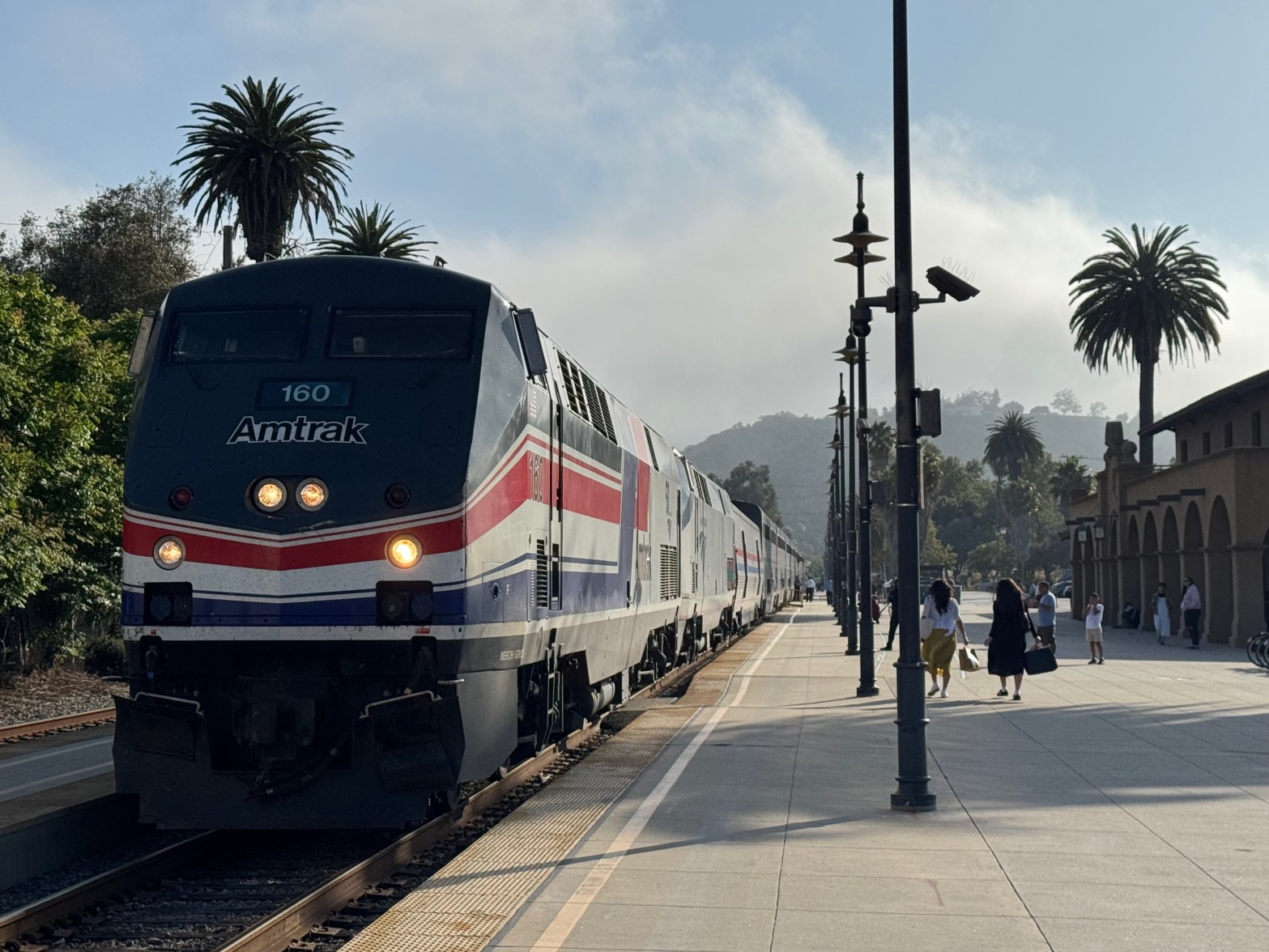
The romance of passenger trains only increased when we moved to California. We made multiple treks down to Disneyland on the Pacific Surfliner. And when my wife insisted I get out of the house on a semester break before I went stir crazy, I went to see my good friend Jeremy in Chicago and cashed in all my Amtrak points on a 4 day/3 night odyssey from Chicago to California on the Empire Builder and Coast Starlight.

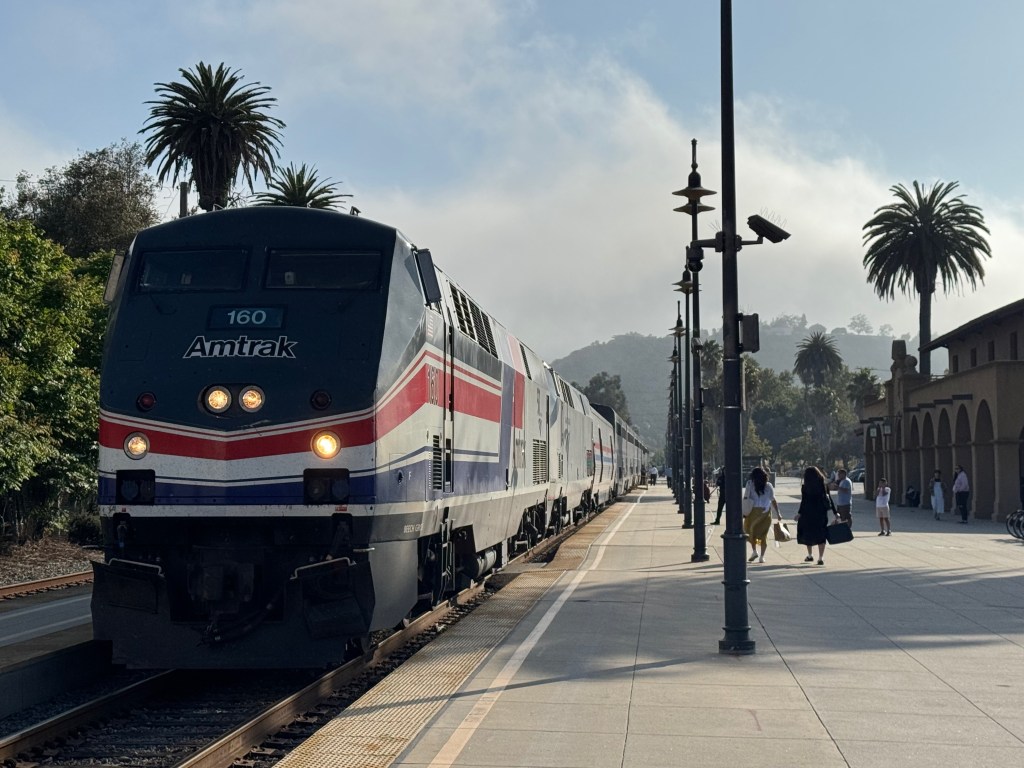
Santa Barbara, CA
Stretching my legs in Oakland, CA. We had extra time because we were running ahead of the “advertised.”

As my railfanning changed, so did my modeling interests. 15 minutes of switching was enough for an operating session. I realized I just wanted to watch a train smoothly run through nice scenery. I wanted to see some passenger trains, with prototypical consists. Try as a might, I couldn’t reconcile that in HO scale with our transient life and limited space. So I somewhat reluctantly ordered a Kato N scale Pacific Surfliner, and a Bachmann Charger to go with it, and found myself hooked. This thing runs great, and the family loves watching it make loops. I’m still firming up what this project looks like precisely, but stay tuned, it should be fun!

Chasing Wheat Trains

Due to space considerations, most of my modeling efforts when it comes to Farmrail have focused on carload switching of oilfield-related commodities. Grain elevators and cuts of shuttle hoppers eat up space quick in HO scale. Furthermore, most of the trips I’ve made out to Farmrail to railfan focused on chasing those oilfield and rock trains. In almost a decade of following the line, I’d rarely seen wheat moving over the railroad.

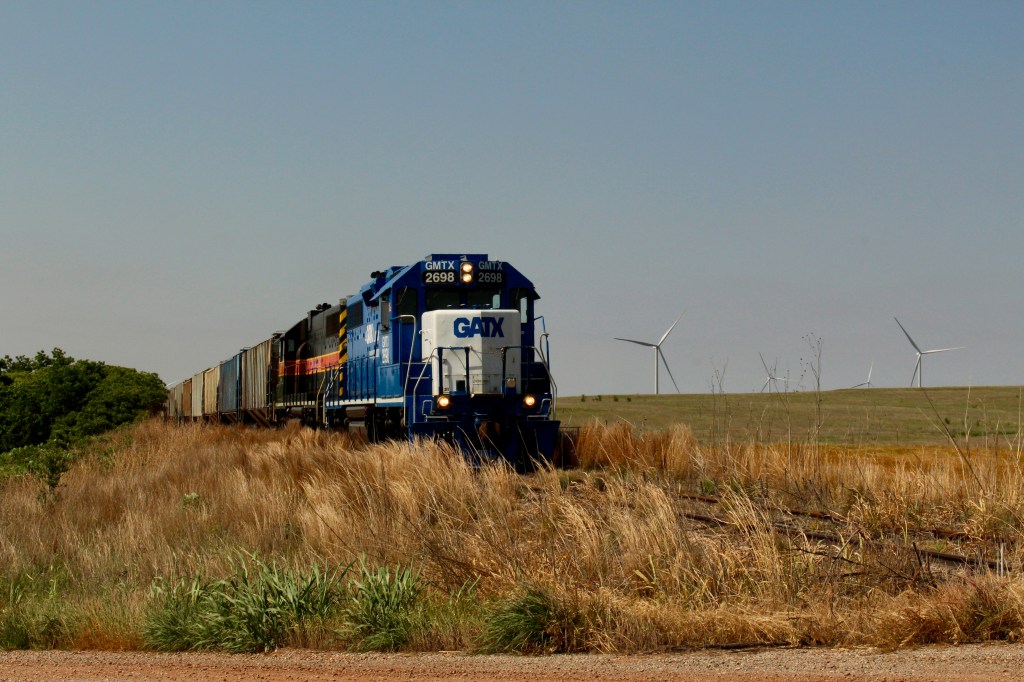
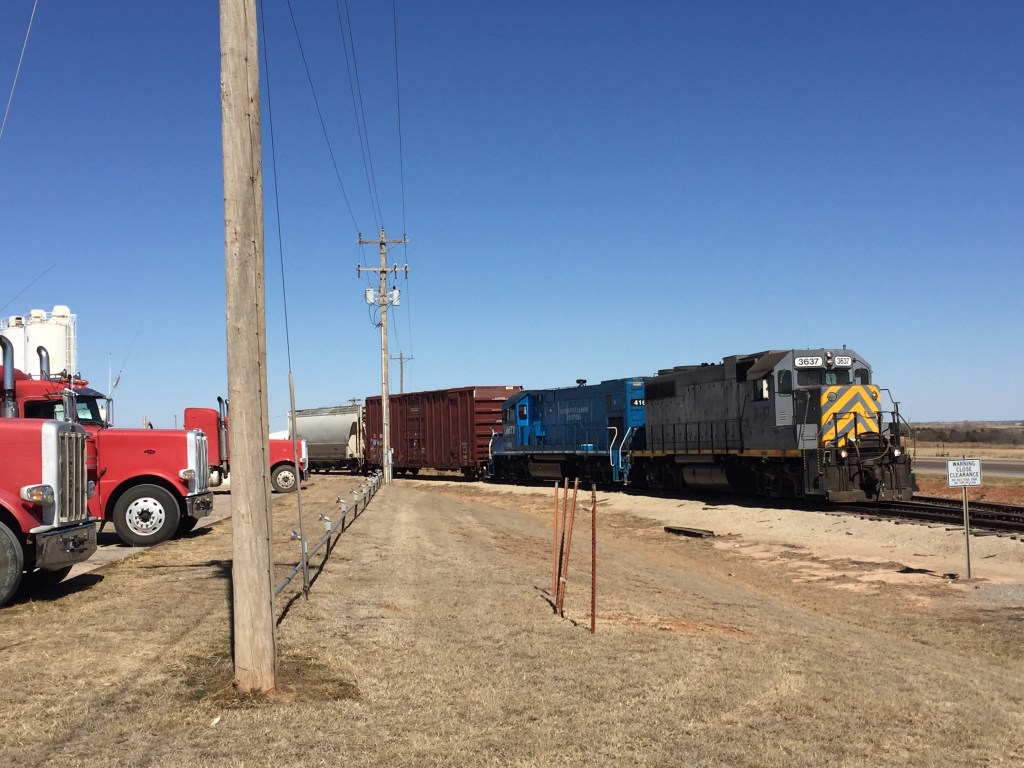
All of that changed last spring, when I made the trip from North Carolina to Oklahoma for a few days. The railroad was gearing up for a big harvest, something that hadn’t happened in western Oklahoma for some years. Thanks to a heads up from a friend, I was able to chase a Farmrail grain train from Lone Wolf, OK to Clinton, OK. The loads were headed from the elevator in Lone Wolf ultimately to bigger “shuttle loader” elevators in Enid. Finally, I was chasing a train full of hard red winter wheat across the rolling hills on the former Kansas City, Mexico & Orient/Santa Fe line.

With a little stormy weather still lingering, the train climbs the grade north of Sentinel, OK. Note the foothills in the distance. Oklahoma isn’t as flat as you might think.
Passing through the sleepy community of Dill City, OK. Note how the grain elevator loading spout has been modified so that cars can be loaded on the mainline. This section of railroad was jammed full of storage cars for years, but improved grain traffic has seen it revived.
At a lonely dirt road grade crossing somewhere north of Dill City.
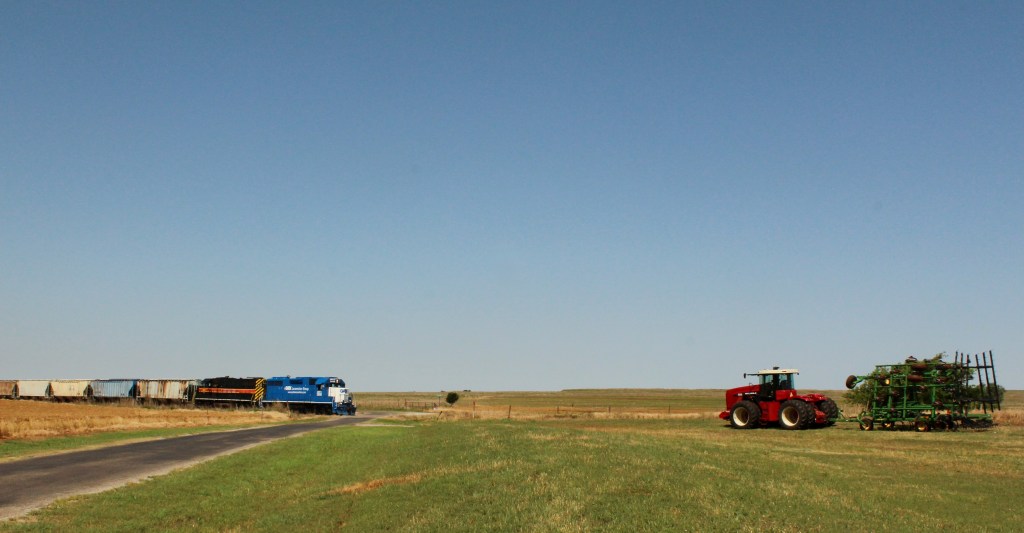
Just a little further north, I couldn’t resist a shot with the train and the tractor together.
Approaching Clinton, OK over more rolling hills

This was one of the most fun railfanning experiences I’ve had. While this sort of railroading doesn’t translate well for a space-starved modeler, its something that I’d like to find a way to model in some form. This is also the sort of scenery I enjoy. From adding join bars to weathering track, to getting weeds and shrubs just right, this is the kind of modeling that gets me going.

I love Joe Atkinson’s work on his new Iowa Interstate 4th Subdivision layout, and its focus on grain elevator operations and beautiful Iowa scenery. Unfortunately, I won’t have even that sort of modest space anytime soon. But I’ve been considering other venues to get my grain elevator fix.

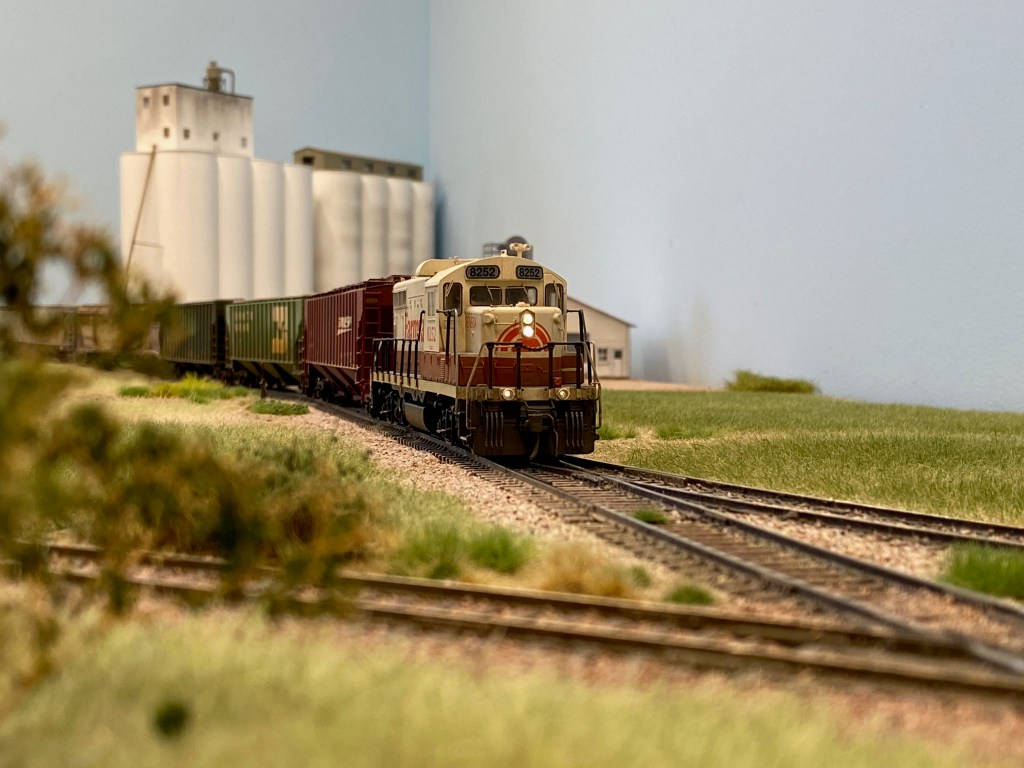
As time has become more precious, I’ve found that often a 15 min operating session is more than enough. What’s equally important is that the layout essentially function as a piece of art in the home. I’ve been mulling over a cameo-style layout that portrayed a slice of a small town, with a run-around in the foreground and a grain elevator and accompanying fertilizer infrastructure along a spur.

I’ve found James Hilton‘s work on cameo layouts and Jack Hill’s HO scale layout to be very inspiring in this regard. And of course Lance Mindheim’s LAJ sets the standard for a layout functioning as art in a room.

While there probably wouldn’t be space to properly model the 5-10 car cuts of grain that Farmrail often pulls from these smaller elevators, the augers and tanks that co-ops often maintain to unload different fertilizers would provide a more modest switching opportunity, and the grain elevator itself and a cut of stored shuttle hoppers awaiting harvest could serve a mere aesthetic function.

While maybe one day I’ll have the space for something like Joe’s Iowa Interstate, I think a simple cameo could help me recreate scenes like this and the fun of that chase along the old Orient in the spring of 2024.

Farmrail geeps work the elevators at Sentinel, OK. Photo credit: Kent Held. https://www.rrpicturearchives.net/showPicture.aspx?id=2585601

I Don’t Do it All (And That’s OK… I think…)

I will never hide the fact that I outsource some tasks when it comes to model railroading. Many people in this hobby are hardcore model builders first and foremost. I respect the heck out of them, but that’s not me, at least in this stage of my model railroading journey. I’m a train enthusiast first, modeling is a vector to take me a to a sense of place and time. The construction that I do enjoy is scenery and details, not structures or painting rolling stock. I think I could never build another structure again and be happy, which I’m sure is heresy to many.

I’ve long used the services of Rob Arsenault of WeatherMyTrains to weather locomotives and high-end rolling stock. Rob is a true professional and a pleasure to work with. Models like these Intermountain GP10s are hard to come by and not cheap. I figured I would either wait years to build the skills to weather them myself, or invest a little more up front to have them looking superb on the layout.

This beautiful addition to the fleet Grainbelt #628, was done by Arthur Bradley of BradleyDCC. In this case, I was lucky that Atlas made the right road number of Iowa Interstate locomotive to model this engine after it journeyed south to Oklahoma. But it still needed decals, patching, LED lights, details, weathering, and DCC & Sound. After sitting on my shelf for a while as a someday project, I sent it to Arthur to have the necessary work done and I couldn’t be happier with it.

I’ve faced some needling or comments from other hobbyists for outsourcing some of these things, but I view it as an investment to allow me focus my limited time on the things I enjoy in the hobby. Some also deride the price. I’ll be the first to say that quality custom work isn’t cheap, and I’m blessed to be able to slowly acquire these pieces, but it also helps keep the fleet intentional and modest in size.

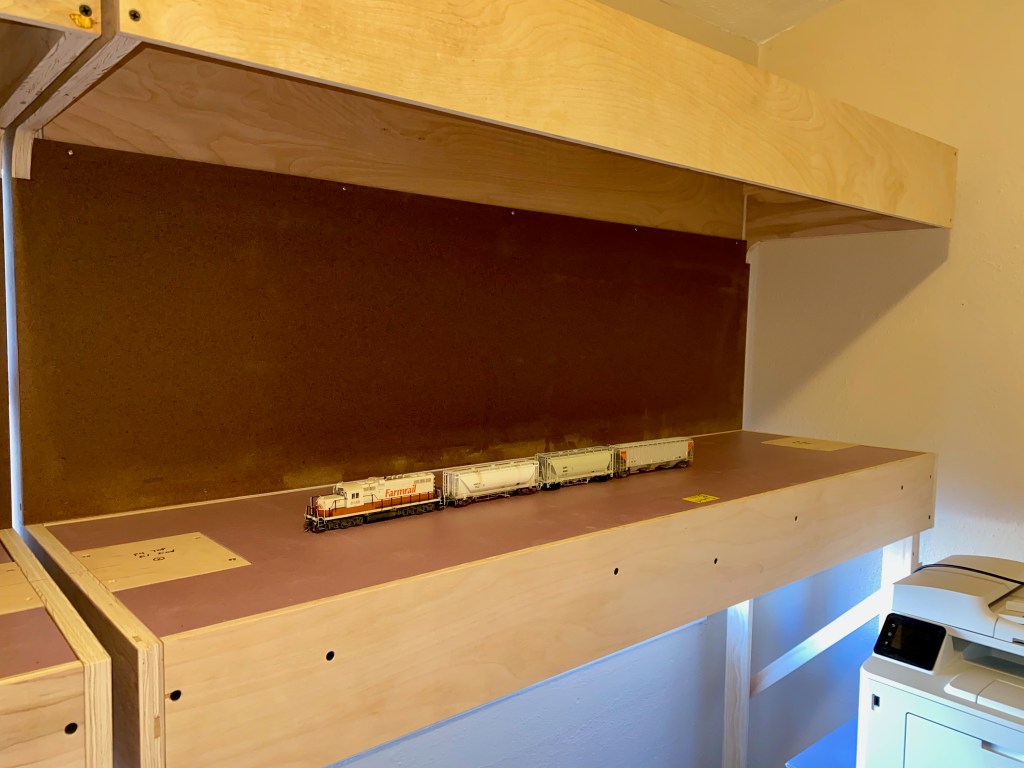
For the new layout, I went a step further: custom benchwork by The Model Railroad Benchwork Store.

My previous benchwork attempts were crude and not as portable as I intended. With this move to California being very temporary, I wanted to make sure the layout would travel well. So I commissioned two 18″x5′ modules with custom valances. The benchwork went up in about an hour and is very light and sturdy. It helped jump start construction considerably, and I can’t recommend James’ work enough.

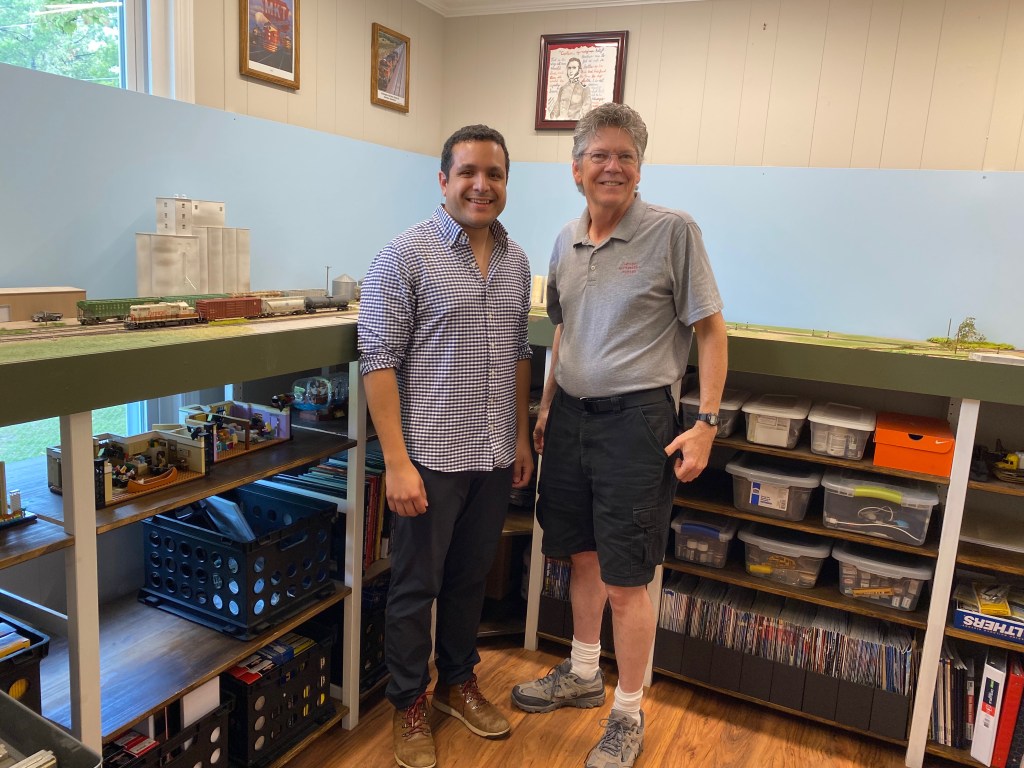
So, here’s the layout as it stands today. The current office/hobby room is poorly lit and storage space is limited, but I think its going to look great when its moved to my study back in our home in North Carolina in a few months:

Its nothing fancy, but its durable, built to move, and fun to operate. This layout was about enjoying the hobby even when life is at its most hectic. Maybe someday I’ll build world class benchwork, weather all my own stuff, and be a pro at installing decoders and LEDs. But for now, relying on professionals for SOME things has given me time to enjoy OTHER things like weathering track and applying static grass. And that’s ok… I think…

Welcome (Back) to Fransen

Farmrail isn’t an easy railroad to model faithfully, especially when you’re space starved and move often. The rolling hills and grain elevators are a challenge. Thankfully, there’s also plenty of industrial switching, especially around Clinton, OK.

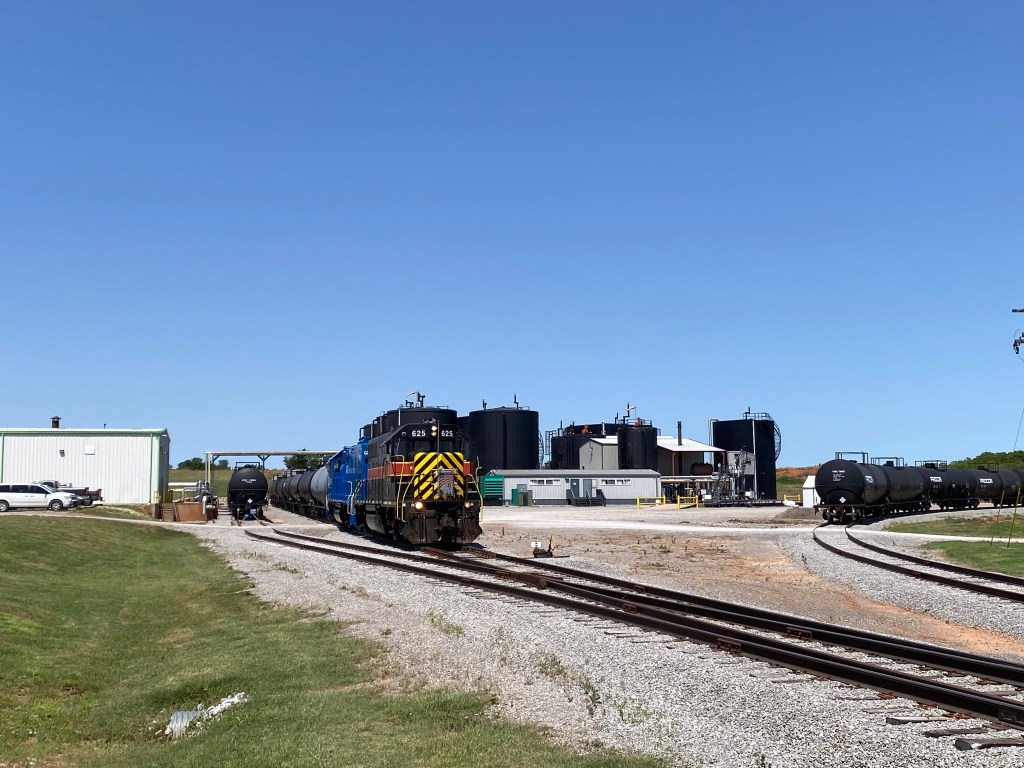
Sometimes, we have to put the layout we WANT to build on hold, but that doesn’t mean we shouldn’t build models. So, in that spirit, I decided to revisit a little industrial park on the south side of Clinton, a place called “Fransen” on the railroad. I’m not sure where the name comes from, but I would venture to guess it goes back to the Frisco days. Its just a cluster of industrial buildings in red dirt, surrounded by scrubby trees, wheat fields, and pastures. But what it lacks in appeal, it makes up for in switching.

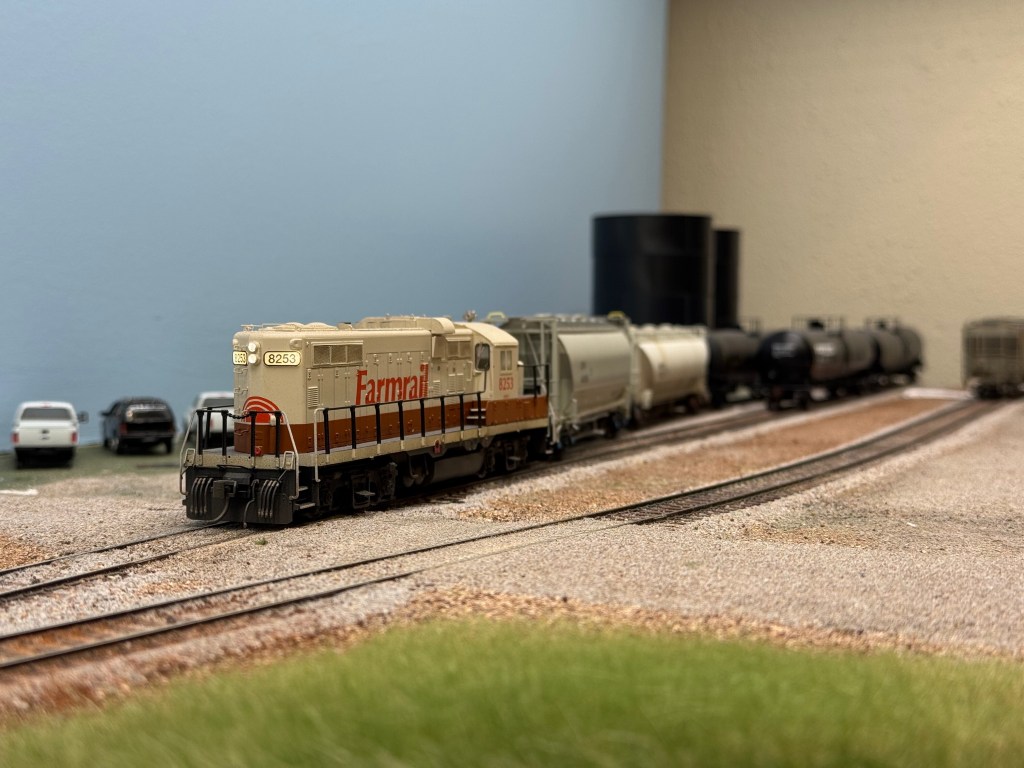
The Clinton Switcher drills tank cars of liquid asphalt in 2024.

The track layout is reminiscent of Lance Mindheim’s East Rail layout. I opted to model the busier of the two main leads. There’s a nice variety of car types, with pressurized differential hoppers and tank cars dominating, but with box cars and regular covered hoppers making appearances as well.

The Clinton Switcher arrives at Fransen in 2018.

Thankfully, I’ve been blessed with several opportunities to take a close look at operations here firsthand. While I wish I had the space for grain elevators and long runs, a small, contained, completely modular switching layout is just what the doctor ordered for this season of life.

A very excited railfan and an equally excited daughter (although a little nervous this close to the noise) pose with the Clinton Switcher after it has returned from a run down to Bessie, OK in 2023.

I actually modeled this industrial park about 8 years ago. I think returning to this prototype was the right decision. So, follow along and welcome back to Fransen. Its good to be modeling home again.

Switching liquid asphalt on the new Fransen layout.

I have a lot to catch y’all up on…

My hope is to get back to writing on here more often. For that matter, I hope to get back to more modeling as my demanding (but rewarding) time as an instructor comes to and end and we’ve gotten the littlest child through her first year successfully.

For now, I have an update to the YouTube channel that shows what I’ve been working on this past year! Hope you enjoy the new bookshelf layout, which I’m calling “Somewhere Down South.”

Still here, still running trains

It seems I always have to preface a post here with “I’ve been really busy…”

However, while work on the layout has virtually stopped, I still do find the time to run trains and “railfan” the layout.

Its nice having a clean, finished layout to enjoy. Often, I only make it halfway through an operating session before dinner must be eaten, a toddler wants attention, or dishes need washing.

A couple months ago, we were honored to have a model railroad celebrity come and visit! Tom Klimoski, a prolific modeler who has written Building the Right Sized Layout as well as numerous articles for Kalmbach, and his wife came to spend the day with us and run some trains!

It was an honor to have a modeler like Tom come and visit. He even autographed my copy of his book (a couple photos of my old East Penn layout are featured in it). Tom has been a huge mentor of mine in the hobby for a couple years now, and it was great to get to visit in person.

If you don’t own Building the Right Sized Layout, I highly recommend it. Tom’s Georgia Northeastern RR is a textbook example of excellent craftsmanship and the possibilities of modern era switching layouts. Check out his website and phenomenal YouTube channel here

https://www.thomasklimoski.com/

He has the distinction of being the first, and likely only guest operator on the Frederick layout. You see, we’re moving to a new home in a few weeks, because we’ve out-grown our little home here. With a new baby on the way, its time to look to a new chapter, which likely means the impending dismantling of Frederick.

Stay tuned for the next project as it comes to life.

What’s Important?

Limited resources will really force you to be introspective and evaluate what matters in the hobby. You can either get bogged down by those resource constraints, or use them to focus in on greatness.

In my case, time and space are the biggest limitations. Our home is small and my model railroad(s) must share the family living space. My military career keeps me busy, and I have a 1 yr. old daughter, so time for modeling has become scarce.

How we choose to negotiate those limitations will determine our success and whether we achieve our end goals. They’ll also help us discover a great deal about our real motivations along the way.

A GP10 shuffles covered hoppers at one of the elevators. These sort of operations are slow paced and enjoyable. I also get a kick out of taking “railfan” photos as I operate.

It may be an unpopular opinion, but I don’t actually enjoy building plastic models. Scenery is fun, and weathering cars is therapeutic, but kitbashing structures and detailing locomotives is not a part of the hobby I enjoy. I prefer the actual model building to come in spurts and have every-now-and-then projects. Other than freight car weathering, I don’t want a project on my work bench all the time. It took time to admit how little the model construction aspect of the hobby is actually a priority for me. Some hardcore model builders and scratch builders may view me as a little bit less of a model railroader, but that’s ok.

So, what is important to me? Having a layout that transports me to a place and time, and something that I enjoy looking at even if I’m not actively running it. A layout that is a part of the study, not buried in a basement. It’s important to have casual operating sessions that I can run solo and enjoy the trains without any preparation work. A place where I can enjoy the custom weathered models that I’ve invested my hard earned money into. A layout where I can “railfan” the trains as well.

Both the locomotive and the hopper car in this photo were custom weathered, and that added to my enjoyment of my layout and model train collection. But there’s something of my own work I am immensely proud of in this picture: the track I painstakingly painted, detailed, and weathered.

Priorities change and skills change over time. I want to get better at the building and painting aspect of the hobby and I continue to try and challenge myself. But I had the realization that if I could commission a new layout from Lance Mindheim’s Shelf Layouts Company and send all my engines up to Rob Arsenault at Weather My Trains for weathering, I’d enjoy the hobby just as much. Weathering rolling stock, small detail projects, casual switching, and letting trains run while I enjoy a book and a beer in the study sounds like my ideal. Of course, that’s not the reality right now, but it was a heck of a revelation.

So what does that mean for future modeling plans? Here’s what I think:

  • Future layouts should have a more proto-freelance approach, where I’m not frustrated trying to build a specific structure needed for a specific prototype. If I could go back, I’d model a composite of favorite scenes on Farmrail, rather than trying to faithfully recreate Frederick, OK.
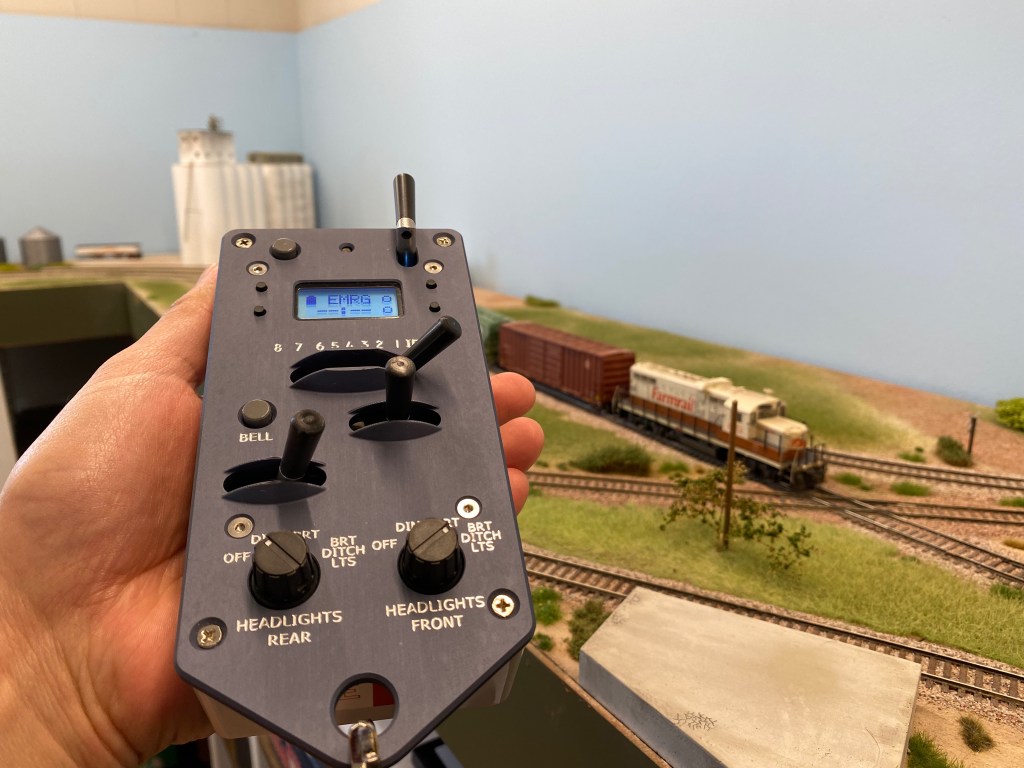
  • I must be unwavering in my philosophy that the layout must coexist with the home and family. Several well meaning, wonderful friends have suggested extending the layout around the room over the closet, adding lift-out bridges, etc. I’m sure it could work, but the thought of trying to find a rain coat in the closet when we’re late for church, chase a mobile toddler through the room, or wrangle a stubborn bulldog who doesn’t want his medicine doesn’t mesh well with that sort of thing. Any sort of set-up work beyond flipping the power switch and firing up the ProtoThrottle would mean I’d run the layout even less.
  • I never realized how much I like to “railfan” my layouts. More attention needs to be given to how it will photograph during the planning stages.
  • Less is more. A 30 min operating session is usually plenty for me.
  • If and when I move on from Farmrail, I need to ensure I select a prototype that gives me flexibility to enjoy things I like. Scenery. Big EMDs. Casual operations. Maybe a short passenger train here and there. And be something that I won’t spend a lifetime custom building and painting things, because it would never get done.
  • On that note, I’ve realized just how much time, money, and space is required to do a model railroad right. I’ve begun to sell off some large parts of my collection that I’ll likely never use and don’t fulfill my priority short term or long term goals.
Honestly, I really enjoyed assembling, painting, and weathering the switch stand in this photo. Its the kind of small project I most enjoy having on the work bench.

Sometimes some self reflection on what you’ve learned so far is good for you. And can help frame out how you should plan for the future!

Running Trains and Enjoying Life

Hi y’all!

I haven’t had much time for a blog update lately. Since my last post, I’ve completed another successful overseas tour and have been enjoying lots of quality time with my family. Its been good to be home, and it looks like it will continue to be home for another 2-3 years!

I haven’t done too much to the layout, but I did acquire a Proto Throttle, and that has really enhanced and improved operations. I can’t say anything about it that hasn’t already been said by others in the model railroading space, but I will say I’m a big fan and happy customer, and I highly recommend it.

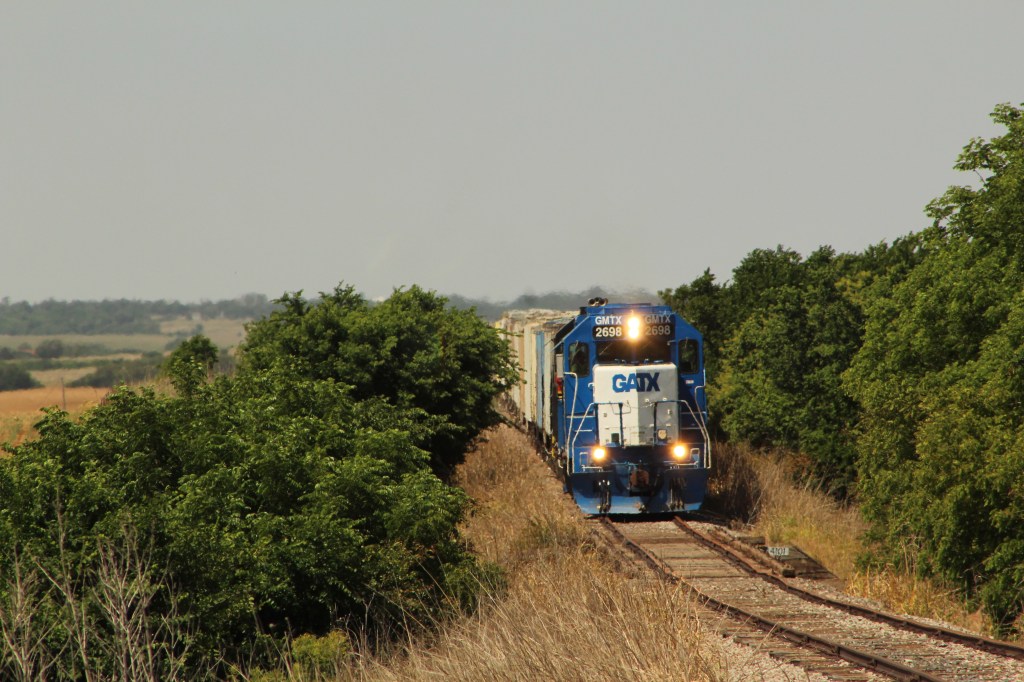
I also recently had fun turning the clock forward on the layout for a couple of operating sessions. I model around anywhere between 1995-2005 on the layout, when there was more traffic on the Frederick, OK line and GP10s still dominated Farmrail’s roster. But when Athearn released a GMTX GP15 in the exact road number for one that is currently leased to Farmrail in the present day, I had to grab it.

These days, Farmrail’s main customer in Frederick is a cattle feed operation that unloads on the “main” line south of the diamond, near the end of the track. They get several cars at a time, some from as far as Canada and some Farmrail shuttle cars from other parts of the system. I don’t model this industry, but it was easy to set cars out on the main and “simulate” them being pulled down to the industry with a front-end loader.

Cars for Stockmans at Frederick, OK. Photo credit: John Strenski

Some of the other elevator tracks and sidings in Frederick are now used for car storage, so I filled a couple tracks with crude oil tank cars and plastic pellet hoppers (commonly stored cars on the railroad). I also simulated running with a conductor in a pickup truck, which changed somewhat where I chose to make cuts, tie down cars, etc.

The resulting operating sessions were fun and casual, and resulted in about 20-30 min. of running. Plenty! Sometimes I would tie down the locomotive in town, sometimes it would return to Snyder. Sometimes cars were switched a short distance to and from the WT&J interchange, which is prototypical as well.

Although the layout has already returned to the late 90’s, I may have to break out the GP15 and do it again sometime soon!

Until next time, y’all!

Telephone Poles and the Horizon

One of the last details I wanted to add to the layout were some telephone poles along two of the roads. I think they turned out pretty decent:

I would like to blend that horizon better with a photo backdrop, but that will have to wait until after my upcoming “work trip.” In the meantime, I’m enjoying running the layout and taking some photos and playing with editing. I’d like to write an article on the Frederick layout for publication.

Speaking of the horizon…

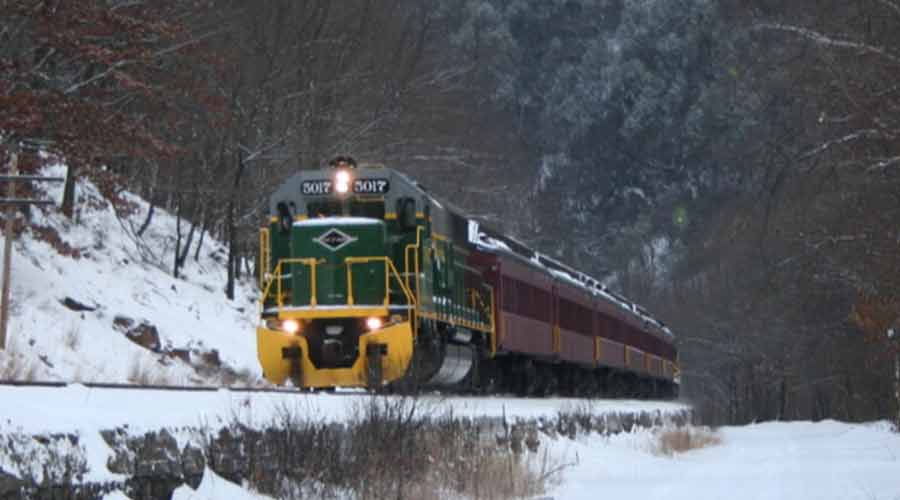
I’ve become really interested in the Reading, Blue Mountain & Northern (better known as the Reading & Northern) and Appalachian mountain scenery. While I don’t think I’m giving up Farmrail any time soon, I want to pursue a “side project.” Priorities include expansive scenery and continuous running, and less of a focus on switching. To that end, N scale seemed to be the logical choice, especially given the fact that Atlas has produced a good number of models in N for the RBMN and they are all easily had online.

Photo credit: Reading, Blue Mountain & Northern

I intend to start this project sometime next year, and am keeping an open mind as to the exact nature of what I’ll build. I envision something free-standing, rather than a shelf layout. My friends have suggested this track plan as a good candidate:

Still in the planning stages, but it should be neat to see how this all develops…

Also, I’ve added some new locomotives to the collection. Here’s my lovely wife (Genesis) running an Athearn Genesis model of an Amtrak Genesis locomotive.

Until next time, y’all. I’ve got some switching to do.